
Words of Hope Forum · Event promoted by Entopan and Harmonic Innovation Group
Alessandro Maria Lerro — lawyer, working on innovation, venture capital, intellectual property and digital accessibility.
Where there are no exits and no recurring returns, private capital does not come. And if it is brought in anyway, the return is sought in the data: the language, customs and memory of a community leave unprocessed and come back as a service to be paid for.
Private capital enters a project for two reasons, and only two. Either there is a possible exit, meaning somebody who will one day buy the stake at a higher price. Or there is a recurring return solid enough to pay for the risk without having to sell. Where neither exists, private capital does not come. This is not a matter of sensitivity: it is the mandate fund managers owe their own investors, and it is a legal mandate before it is a cultural one. The exceptions usually cited, mobile payments or solar energy sold by consumption, do not contradict the rule: in those cases the recurring return was there, small, frequent and measurable.
It is worth clearing away at once the idea that this is an African problem. Italy is a wealthy country, with excellent human capital, and it remains unattractive to international venture capital for one reason only: exits are few and almost never of an interesting size. If the mechanism jams in Milan, it will not work in Nairobi merely because it has been written into a development programme.
The real question is what happens when we press ahead anyway. The capital does not disappear, it changes shape. If the return cannot come from the growth of the local company, it will be sought in whatever can be taken away regardless of the local economy. This is the paradigm that characterised the extractive industries for centuries, and the inequality that follows is not an accident but the predictable result of how the transaction was built.
In artificial intelligence that paradigm takes a precise form, and it is worth calling it by its name. Training a model on an under-represented language requires speakers, recordings, transcriptions, texts, knowledge of customs and turns of phrase. That material is collected on site, usually paying for the collection and not for the content, and taken elsewhere. Elsewhere it becomes a model. Then it returns to the country of origin as a service, for a fee, under a licence that country does not control and at a price it does not negotiate.
The raw material leaves unprocessed and comes back refined. This is the cycle of the extractive industries, with two differences. Here the raw material is the language and the culture of a community, meaning its customs, its turns of phrase and its memory. And it crosses the border without needing a truck, so without customs, without a concession and without royalties. What stays in the territory is the low-margin part: data labelling, support, language adaptation. What comes out is a perfectly legitimate operation, compliant with every rule, that leaves far less behind than it takes away, and that in the programme documents will be called a partnership.
I am not arguing that private capital should stay out. I am arguing that calling an operation an investment when it has no return mechanism is a classification error, and classification errors are paid for four or five years later, when the pilot ends and nobody renews it.
There are two serious routes: building the conditions for an exit actually to exist, which concerns capital markets before it concerns technology, or using instruments that do not require an exit at all. On the second front, tested schemes already exist that leave a share of the value with the communities that produced the data and contributed to the training: collective ownership of language corpora, licences that make access conditional on terms of return, payment tied to use of the model and not to collection alone. International law already knows a close precedent, that of genetic resources, where access is conditional on sharing the benefits with the country and the community of origin. The point, then, is not to stop the language and culture of a community from being used to train models. It is that those who produced them should share in the value that follows. Those alternatives will be the subject of my next article.
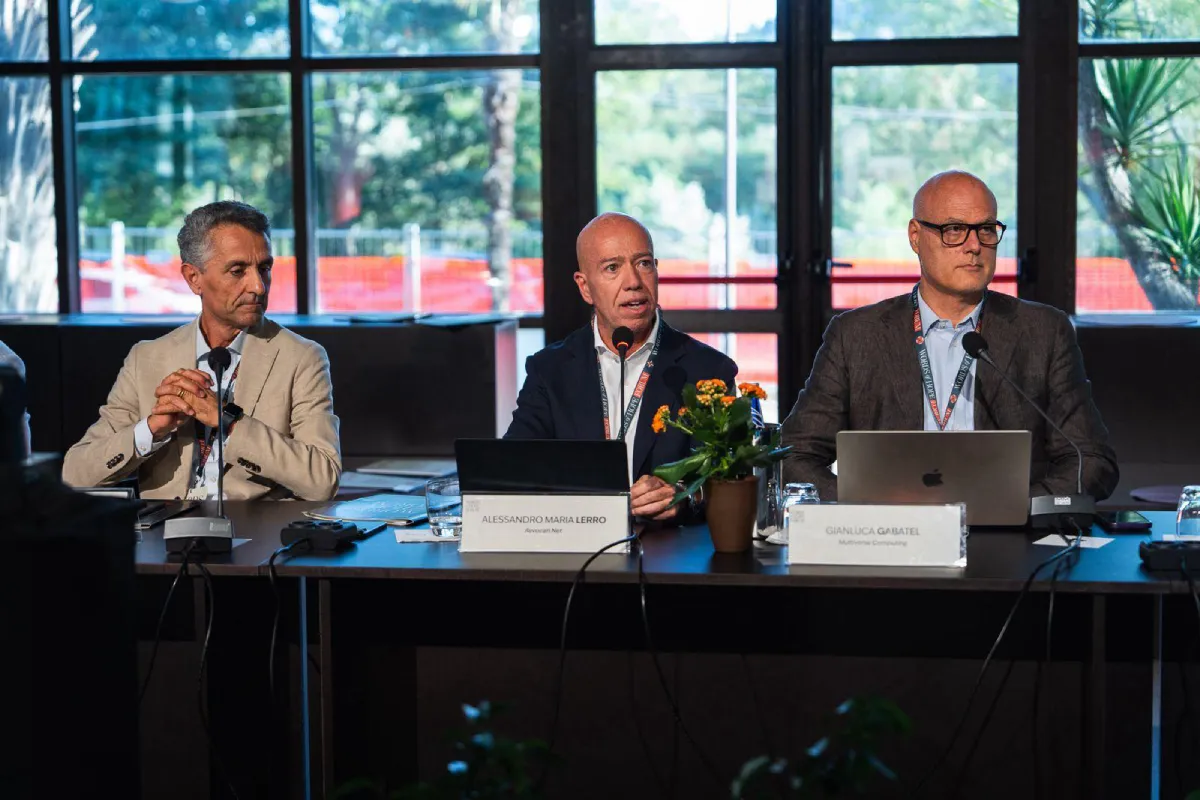
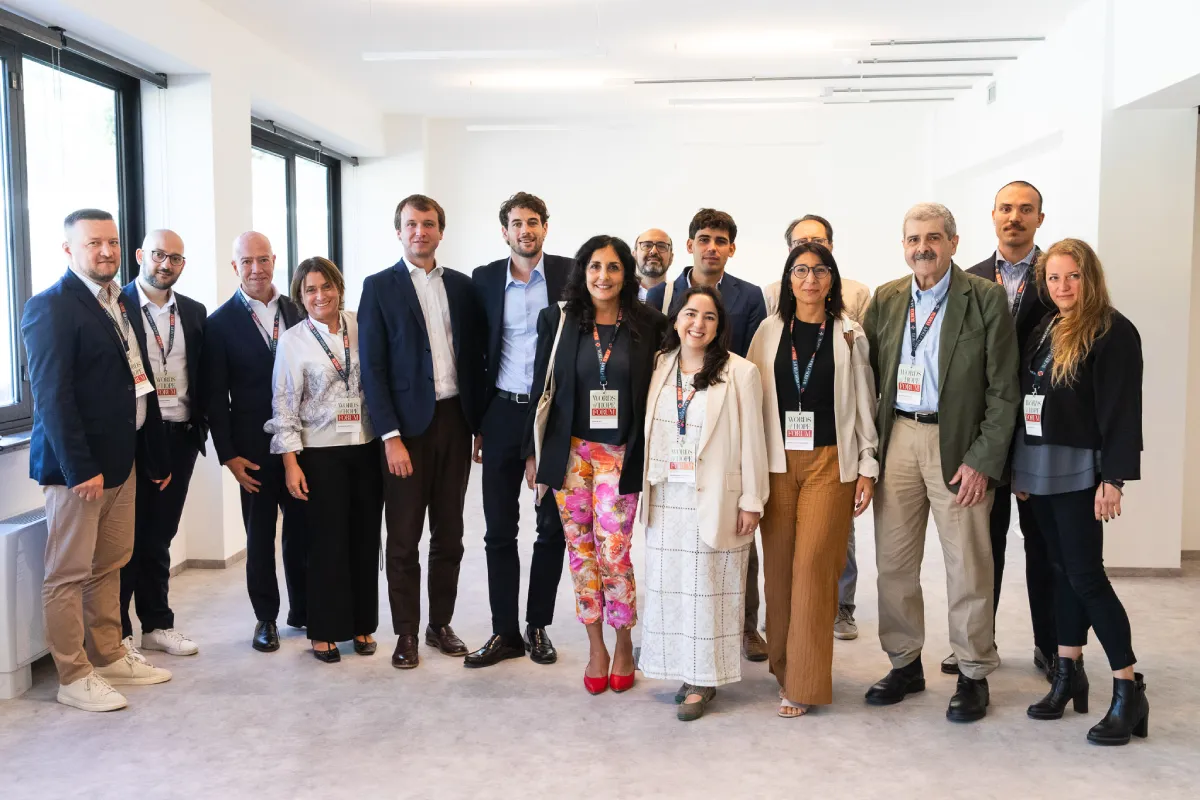
I set out this argument on 24 September 2026, in Calabria, at the Words of Hope Forum, in the working group on the territorial impacts of emerging technologies, in front of representatives of international organisations, companies and research centres. The discussion started from a trend that is by now plain in development finance: fewer grant resources, and more programmes built with the participation of private capital.
(c) 2026 Alessandro Maria Lerro