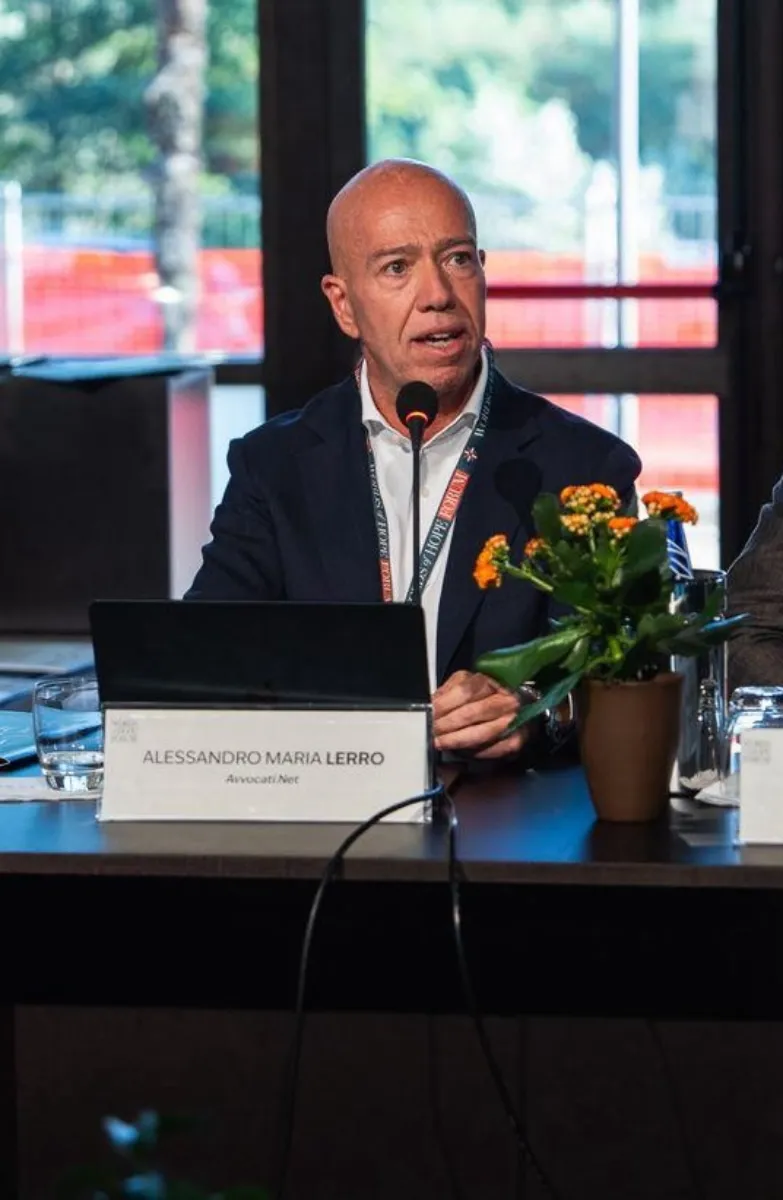

Words of Hope Forum · Event promoted by Entopan and Harmonic Innovation Group
Alessandro Maria Lerro — lawyer, working on innovation, venture capital, intellectual property and digital accessibility.
In the first article I argued that the language and culture of a community leave unprocessed and come back as a service to be paid for. Here I try to answer the next question: through which instruments is part of that value returned to the people who produced it.
Let me start with the fact that changes the tone of the whole discussion. I looked for a case in which a country, a community or an authority has obtained a royalty, a revenue share or any economic return from a model trained on its language or its culture. I did not find one. The most recent peer-reviewed survey examines the cases that are always cited, from Māori to Irish, from Guaraní to Inuktitut, and reaches the same conclusion: the number of cases with an economic return is zero. What exists is control, not redistribution. The distinction is worth holding on to, because in this field the two are constantly confused.
Control, where it exists, works. Te Hiku Media, a Māori community broadcaster in New Zealand, collected hundreds of hours of speech and released them under a licence built for the purpose: access requires permission, commercial use is not allowed unless expressly granted, and every derivative remains bound by the same terms. There is no royalty clause. The value stays with the community because the community is the vendor, not because it receives a percentage. It is a strong model, and it requires a precondition almost nobody has: an organised body, with technical skills of its own, able to say no.
On the labour side, some pay the people who produce the data properly. An Indian company that collects speech in local languages pays its contributors well above national minimums and has announced that it redistributes the revenue from resales of the datasets. That is real progress, with two limits worth stating: it concerns individual workers and not the community whose language it is, and it is a stated corporate policy rather than an obligation anyone could enforce.

The legal instrument, however, already exists, in another field. For genetic resources, the Nagoya Protocol, in force since 2014 and now binding on more than one hundred and forty states, makes access conditional on the prior informed consent of the country of origin and on mutually agreed terms, and extends the same rule to the traditional knowledge of indigenous and local communities. It is not a statement of principle: it has compliance certificates, checkpoints and verification duties on the countries where the resource is used. Transposing that model to language and cultural data has been proposed in the literature, and it is the most solid route currently visible. It remains a proposal, not a rule.
On the financial side, instruments that do not require an exit exist, and they come in two kinds. Revenue-based financing, used in Africa and in India, replaces the equity stake with a percentage of turnover: it is useful, but independent evaluations show mixed results and it mostly concerns working capital rather than companies that will never exit. The second kind matters more here: the advance market commitment, a binding promise to buy at a set price a good that does not yet exist. It financed pneumococcal vaccines for low-income countries with one and a half billion dollars, and it has returned recently for carbon removal and other emerging markets. Applied here, it would mean guaranteeing a market to models built on under-represented languages, which today have none.
And here comes the obstacle that, as a lawyer, I consider the most serious, and that almost nobody names. Even assuming the money is there, the recipient is often missing. Many of the communities that produce this data have no legal person able to hold rights, negotiate terms and receive a payment. The best known African language research networks, for example, are not even incorporated. Without that body, the value-sharing clause remains a good intention: there is nobody who can sign it, collect under it or enforce it.
Hence the proposal, which is modest and fits in three lines of a tender specification. First: whoever supplies a model shall declare the provenance of the training data and the title under which it was obtained. Second: payment shall be tied to use of the model and not to collection of the material alone. Third: the recipient of that payment shall be an identified collective body, and where none exists, creating it is part of the project and not a later formality. The third point is what separates a principle from a contract.
No new treaty is needed to begin. What is needed is for one public buyer, or one cooperation programme, to put those three lines into a tender and verify them at acceptance testing. Until a single precedent exists, all of this remains theory. Whoever goes first sets the standard for everyone else.
This argument comes out of the working group on the territorial impacts of emerging technologies at the Words of Hope Forum, in Calabria, on 24 September 2026.
(c) 2026 Alessandro Maria Lerro